

How Long Does Polymeric Sand Need To Set Before Rain
How to employ polymeric sand:
- Don't cheap out on sand
- Read the Instructions
- Set aside ample fourth dimension for the projection, haste makes waste matter
- Check the conditions, you will demand two days of sun and dry weather
- Use a broom to fill gaps
- Remove excess residue with a leaf blower
- Shower your pavers to seal and harden the sand
- When watering in the Poly Sand, yous shouldn't h2o besides much or as well little
- Allow your pavers remainder
We've all seen those patios with the nice green edge around each of the pavers. Appealing, right? We've also all seen patios with a ton of weeds or piddling anthills jutting out of the cracks in its border? It seems that everyone has come across 1 of these issues when dealing with pavers. The gorgeous weed- and ant-gratuitous paver driveway is the production of polymeric sand. Historically, pavers for patios, walkways, and driveways were installed with regular masonry sand. After paver installation, the sand would exist swept into the paver joints. Simply the lack of binders in the sand would allow washout and cause weeds, grass and ant hills to form. The introduction of polymeric sand helped homeowners prevent these unfavorable occurrences, however. Poly sand is an advanced mix of fine sand and polymer additives . Upon proper installation, the polymers activate and demark the joint sand matrix within the paver joints. Poly sand is thus known for its durability. Its binding ability locks pavers together, assuasive the joints to stay potent for the long haul. Where regular masonry sand of yesteryear allows h2o to seep through and launder between the layers of the underlying patio, polymeric sand stays put when information technology rains. This advanced sand remains solid and dry to stop weed and insect infestation. Notwithstanding, information technology becomes relatively flexible when wet to prevent cracking during freezing and thawing. How do you make sure you're using polymeric sand properly? What steps must you lot take to ensure an unshakable installation? Polymeric sand is a great alternative to traditional paver articulation sand and its common pitfalls. Make sure you follow these best practices when installing pavers. Your patio will be weed- and ant-complimentary for years to come up, and you won't have to worry almost installing pavers for years. If this process seems a footling daunting, you can always achieve out to our expert for advice or have us give you an guess to do the work for you. If you're looking for a contractor to assistance, expect over our contractor comparison checklist. Just click below to get your copy of our comparison checklist. What is Polymeric Sand?
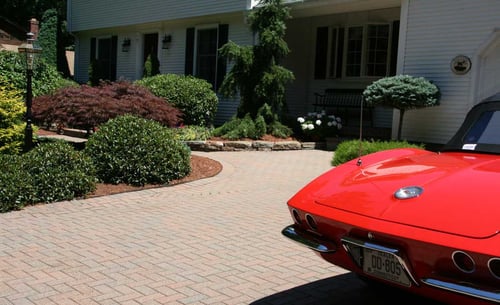
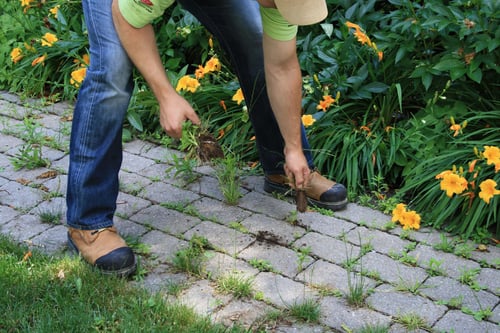 Weeds can abound in the worst of weather , including traditional paver joint sand. Only because polymeric sand hardens and seals, it's much more difficult for weeds to root in. As for insects, ants similar patios for their loose dirt, making it practiced ground to colonize. Polymeric sand is as well hard for ants to tunnel through, however.
 Expert Tips For Solid Polymeric Sand Use
Some sand manufacturers employ lower-quality polymers and sand in order to cut their own costs. While this will save you some money in the short term, you'll merely wind upward needing to redo your piece of work sooner than necessary. The polymers that final longest cost a petty more, but you lot won't have to dip dorsum into your bank account for quite some fourth dimension. 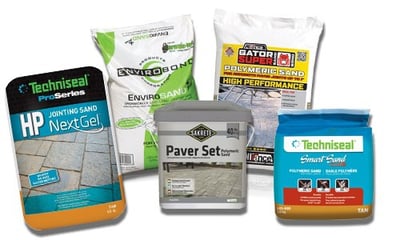 Read the Instructions
Each manufacturer puts installation instructions on their packaging for a reason. Save yourself a lot of stress, mess and money and follow the directions. Improperly installed poly sand can ruin a great paver project.
If you desire your patio finished for tomorrow's family picnic, you should rethink your timeline. Considering it takes time for sand to fix, you lot'd be better off rescheduling the installation. Information technology'll exist worth the look to avert the take a chance of a potential disaster.
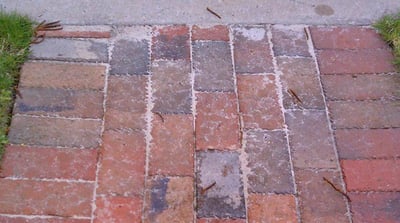 In order for the paver joints to gear up properly, they ideally need 2 days of sunday and dry atmospheric condition. A hard pelting could crave you to start over. If rain shows upwards earlier or shortly subsequently finishing your installation of poly sand, you will have a literal mess on your hands. Installing polymeric sand when the surface of your pavers is wet tin also cause unwanted sticking of the polymers to the surface, which can brand them hard to remove. If it rains after you're washed and the sand hasn't had time to gel, the sand may wash out onto the peak of the pavers and require certain paver areas to be reinstalled.
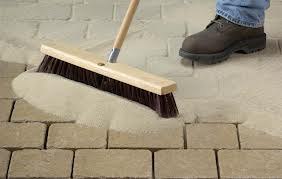 Filling the gaps of a paver is vital to a proper installation. Using a back and along motion, brush a push broom over the sand to ensure that each joint is filled to the entire depth of the paver. After brooming it into the joints, pack the sand down to remove air pockets and eliminate inconsistencies throughout the polymeric sand. While skipping this step may save you time, y'all'll also chance having joints that settle, scissure, and break over the long term.
*Ideally, you'd use a rolling compactor or plate with a neoprene pad compactor to run over the surface of the pavers and eliminate air pockets in the joint sand. This tool will increment the overall forcefulness and functioning over the long run.
Use a foliage blower at its lowest setting to blow away any excess polymeric sand residuum. Angle the blower at roughly 30 degrees to ensure you're not blowing sand out of the cracks. You likewise desire to make sure you're removing all the dust off the surface of the pavers, which may cause staining on the pavers after drying.
 As with the leaf blower, use the light pressure level of a shower nozzle to gently water the sand according to the manufacturer's instructions. Don't use a hose's normal pressure to spray your pavers. Y'all desire to saturate your sand just until the water stops soaking into the articulation. Remember, using too much h2o too chop-chop can wash out the polymers, while too little water can leave your joint fragile and susceptible to to neat under slight distress.
Don't use too much or too little h2o. The amount of water you use is a disquisitional element to an installation. Using too much water tin cause the joint to over-saturate and result in polymer washout, mushy sand, and a weak bond. It can also result in backlog sand spreading onto the surface of the pavers, which is both difficult to remove and an eye sore. Conversely, failing to utilize plenty h2o leads to an incomplete polymer activation and weak bond, washout, and less resistance to weeds and ants infestation.
No affair where you install your pavers, you desire to give them time to set and remainder. Keep away from walks and patios for at least 24 hours. If the pavers are for your driveway, look 48 hours before driving over them, It's as well best to look a full 30 days before you try to make cleanor sealyour pavers. They need weeks to fully cure. Install Strong Pavers with Polymeric Sand

Source: https://www.bahlerbrothers.com/blog/9-expert-tips-on-using-polymeric-sand
0 Response to "How Long Does Polymeric Sand Need To Set Before Rain"
Post a Comment